
Welcome to your weekly Boomer Women Inspiration Series
Chapter Six - Today's World: Welcome back! This week we take the opportunity to once again broaden our view with our Boomer Women. We start to look at the societal issues they feel are important to them and their generation, and why. In an exciting development, this week's set of activities also saw us openly prompt a discussion on charities with our community for the first time - even though it's already cropped up spontaneously throughout!
In this edition, expect to discover a few snippets as to their views and opinions on their own legacies and how these play into some of the world’s social problems, who they feel is likely to make waves in these areas in the future, and the role of charities as part of this grand discussion.
Let's start by looking at how Boomer Women view legacy, and let's begin with a poem.
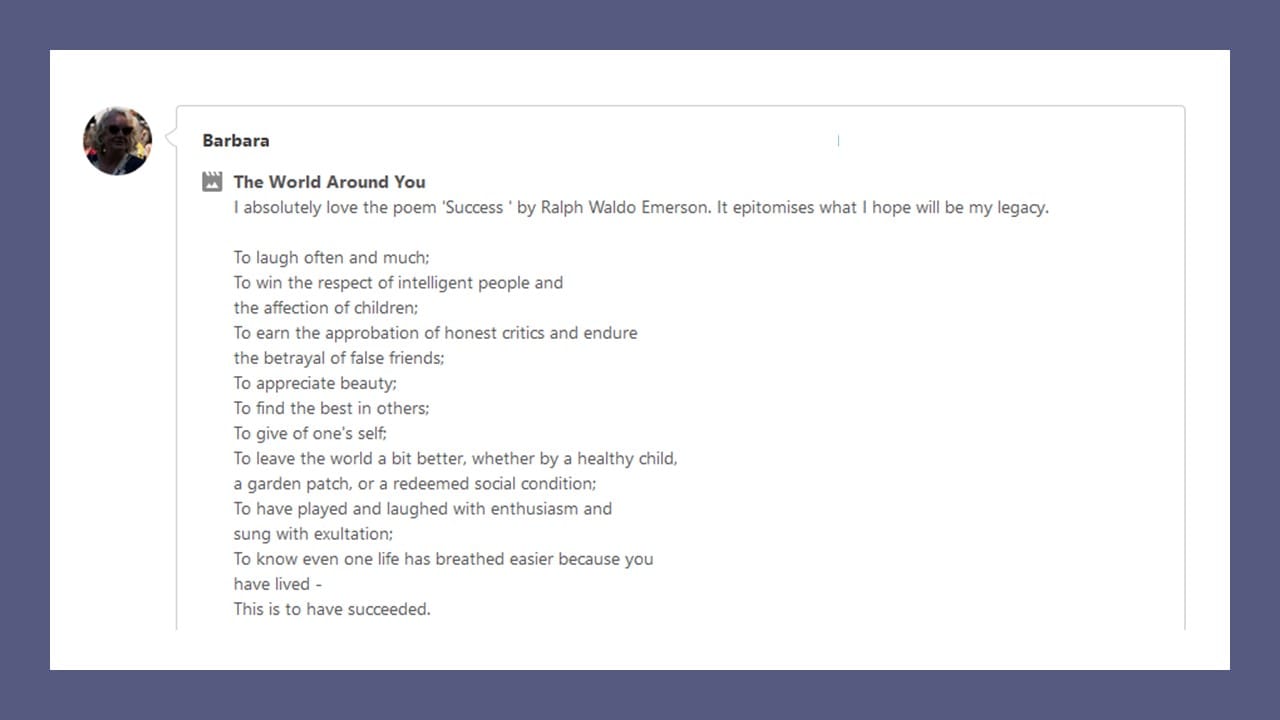
Legacy for Boomer Women lies in the little things
When thinking about their own legacy, our women prefer not to see themselves as world changers, but rather those who place great emphasis on the small acts in life that add up to a bigger difference. They are not concerned with leaving behind grand displays of materialistic or public success, but rather consider the impact and influence they would like to think they've had on those closest to them.
For them, legacy is something that lives and breathes close to home and within their personal spheres of influences. Acts of kindness, showing care for others and a focus on communities that help each other are all important parts of leaving something behind that they can be proud of. Passing on positive values to those closest to them in order to feel as though they've left a moral influence lies at the heart of legacy for many.
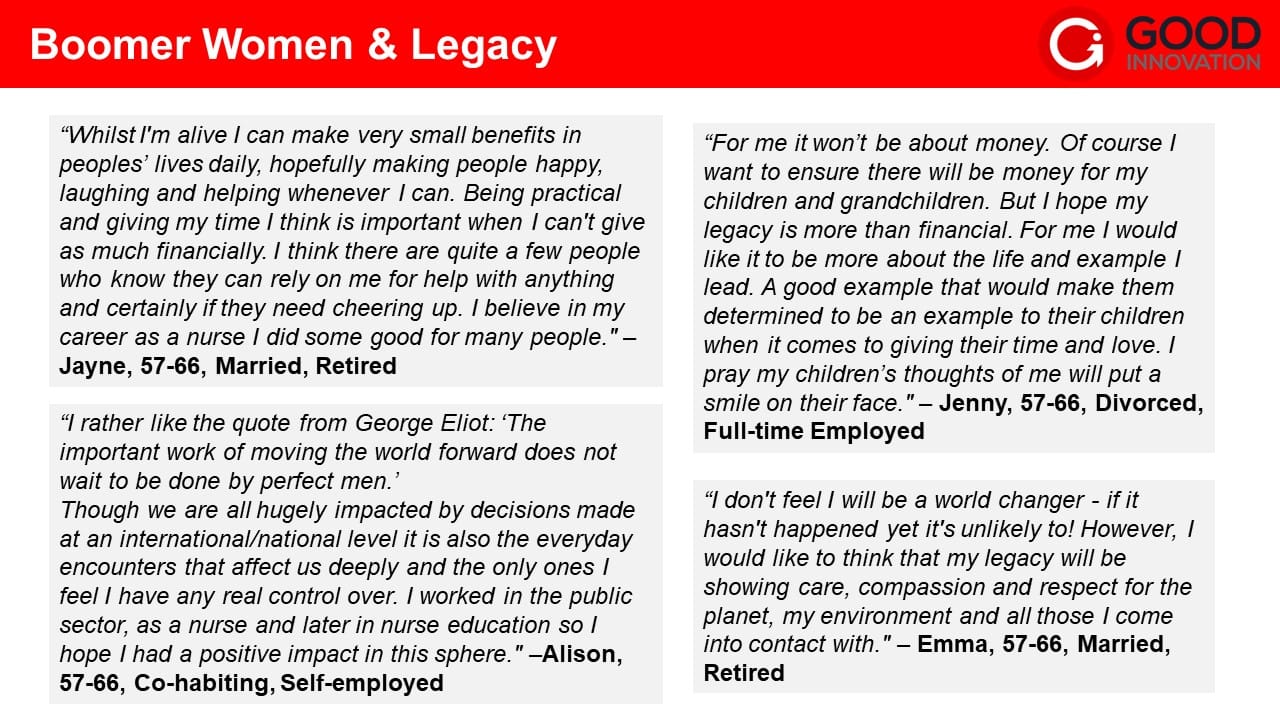
But tough times have forced them to cast their nets more tightly
Tough economic conditions for today's younger generations, and some awareness of their own generation's unique pathway to prosperity, has led many to place a greater focus on helping their immediate family as a first port of call. Many are aware of the struggles that their own descendants are facing when it comes to establishing their lives, and feel obligated to consider how they can use their resources to help them. As a result, charity is increasingly not just beginning in the home, but being restricted to it under increasingly constrained economic environments.
"My first priority is my family and the effect on future generations. I hope to leave them with enough of a monetary legacy to cushion them for a short time against financial concerns. I believe I have taught them consideration of others and have helped them to work out their priorities." - Alison, 67-77, Divorced, Retired
Who will have the biggest impact on our world in 2050?
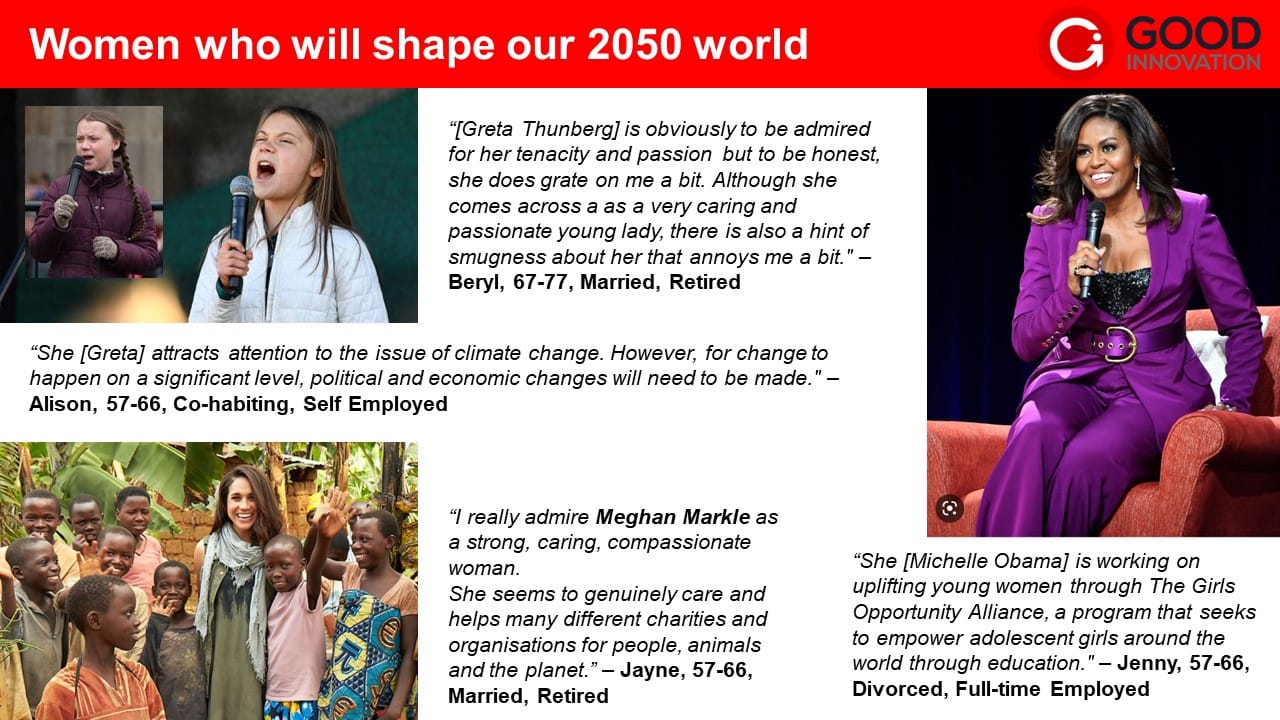
Unsurprisingly, our audience picked out three iconic women who they feel will have a lasting impact on the world for the better in the future. What unites them is their passion and commitment to their causes, and not being afraid to ruffle a few feathers in order to attract attention to the causes they're raising awareness for!
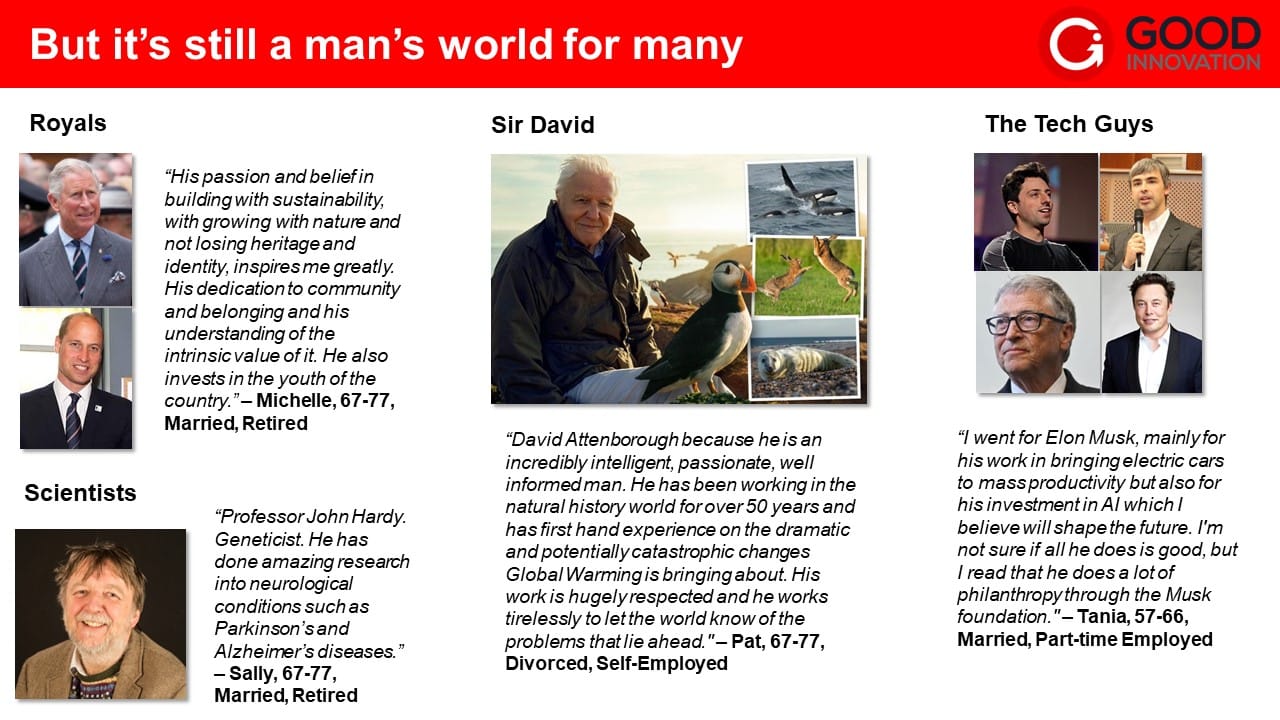
However, females were in the minority for even our Boomer Women. They still felt the world ahead in 2050 was likely to be influenced most by a host of men; emerging from the worlds of monarchy, technology, science and - of course - the untouchably unique, Sir David Attenborough.
Charities have a vital role to play in today's world
Boomer Women grew up and spent much of their lives with a solid awareness of charities and their influence on the world around them. And they identify that they're needed now more than ever for a number of reasons:
"Charities bring people together to reflect on their social responsibility and to fill gaps in existing support." - Barbara, 67-77, Married, Part-time Employed
"I think the role of charities is critical when considering the big issues in the world today. They raise awareness and funds and solve problems. Their educational role is paramount. Lobbying parliament when appropriate is also important. I particularly respect charities that try to address the route of the problem." - Alison, 67-77, Divorced, Retired
"Charities are absolutely vital. They are on the ground seeing what people are facing. They have the expertise to know how to help." - Tracey, 57-66, Married, Retired
"I think the country is propped up by charities filling the gaps in society that authorities cannot meet. Where there are global disasters charities step up to aid the vulnerable. In the cost of living crisis charities feed and clothe people and their dependents, help pay bills and give hope. Without charities the world would be a lot scarier and desperate." - Ann, 67-77, Married, Retired
But they've become more discerning towards them over time
Whilst they recognise their vital role, many Boomer Women acknowledge that they've become more selective when it comes to choosing which ones to actively support. With what feels like a proliferation of charities in recent times, increased awareness of 'wastage spend' at larger ones and media coverage of scandals, it's become harder to decide which charity feels msot worthy of their time or money.
"One thing that puts me off making a donation to some charities is the large salaries their senior staff earn. I understand that they need experienced staff and they may earn less than in other sectors but it puts me off making a donation. So my feelings are mixe;, I recognise the support they give is essential to many, they may also act as a voice for change but do they really need to pay senior staff so much?" - Alison, 57-66, Co-habiting, Self-employed
"I do wonder sometimes that some charities could amalgamate, as they are doing the same things. However, I am constantly surprised by the number of charities that I haven't heard of who are doing amazing work. Particularly regionally, people may have a great charity close to them offering face to face support, while other people who live far away can only access online support, or sometimes no support at all." - Tracey, 57-66, Married, Retired
"I fear they have become too compromised and become sometimes part of the problem. They are used by politicians as an excuse not to provide structured support, by some people as a business opportunity, and are slow to remedy the mistakes they make." - Joyce, 67-77, Married, Retired
There's clearly no easy answer to many of these conflicting and mixed feelings. But as we start to explore the world of charities in more detail over our final weeks, we'll be sure to unpick new ways that you and your colleagues can navigate these waters.