
Drawing the curtain on Chapter Two
Faster than a TikTok dance craze, we've come to the end of our newsletter series! In an exciting two prior weeks, our Zoomers have been busy sharing their thoughts, opinions and ideas on not just Visual Impairment and Disabilities as a cause but specifically on you: Guide Dogs UK.
They've taken a detailed look into some of your materials and shared what drives them to engage across volunteering, donating, fundraising and campaigning. Not only that, but we've also asked them to unpick the key moments in their life for charities to best approach them to capture their support.
So, swipe (or scroll) down to get stuck into a snapshot of what they told us!
They love your work!
Not only do our Zoomers have a huge amount of respect and appreciation for what you do as an organisation, they're also extremely buoyed by the fact that you're engaging with them specifically as an audience - as they can feel a bit neglected when it comes to charities:
"I'm so happy to see Guide Dogs UK are behind this community! I think they do excellent work to help those with sightloss adapt."
"I am happy that Guide Dogs are sponsoring this community as they are such a positive and impactful charity that work so hard to meet the needs of individuals who are visually impaired."
Their Key Piece of Advice? Social Media, and making them feel involved.
They were consistent in their belief that Guide Dogs UK could make greater use of social media - it's where they're hanging out and having their most interactions! Alongside that, making them feel more involved with initiatives aimed directly at them can catch their eye:
"To better engage with young people, as others have said, a bigger social media presence would be hugely beneficial. If we are targeted with marketing from a younger age, we're more likely to want to help when we are older and more financially stable. Examples of a positive social media presence are things like pictures of cute dogs and inspirational stories of how guide dogs are able to help people."
"When I see adverts for charities, they’re usually focussed on older adults, and while older adults should be acknowledged and supported, young people with disabilities should also be given an equal amount of coverage."
Welcome to Quick Wins:
In this section, we highlight a sample of quick and actionable tactics that could help to drive engagement with our Zoomers, whether it be across Fundraising, Donating, Volunteering or Campaigning. These are all based on the specific ways you've spoken about these critical areas in your materials, so let's dive in!
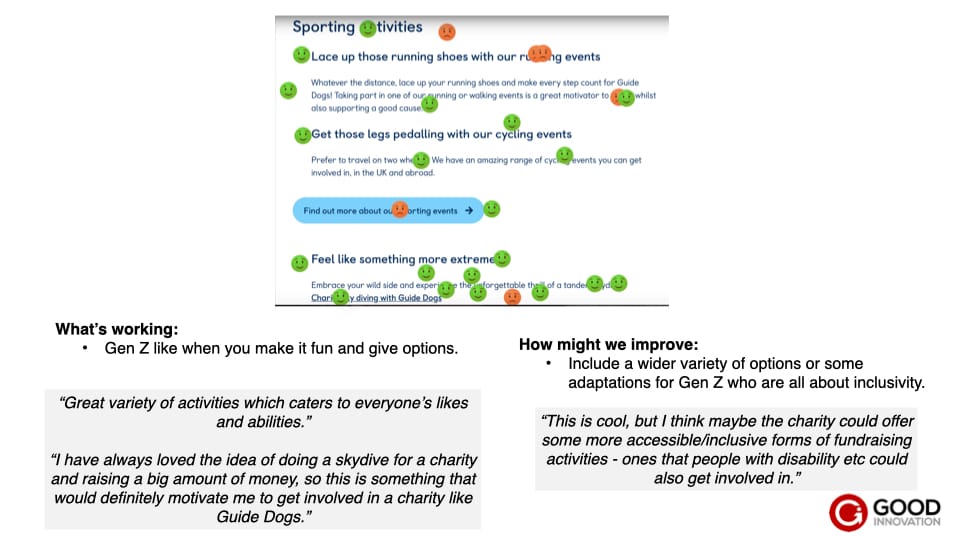
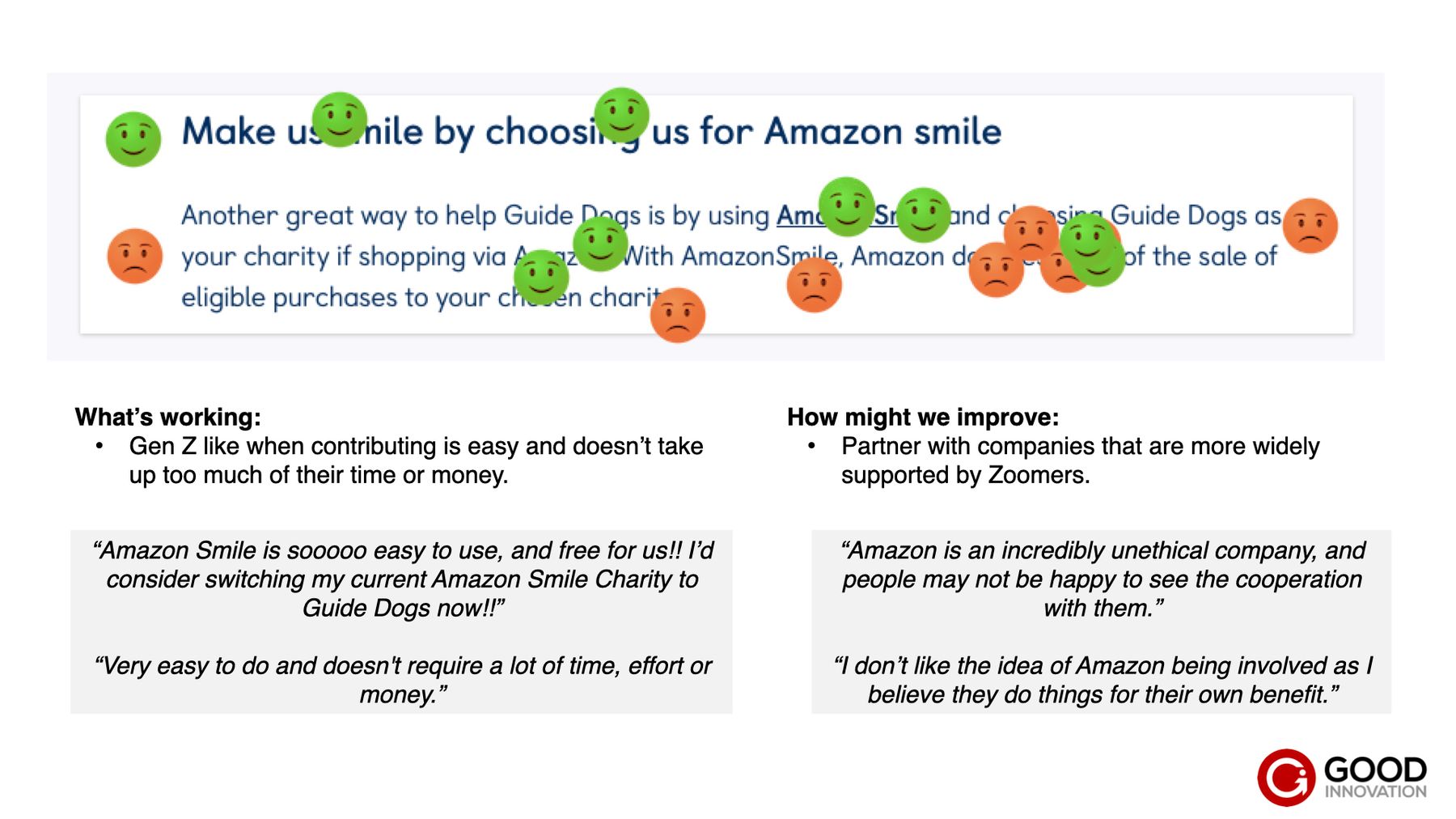
Fundraising & Donating: Make it fun and easy
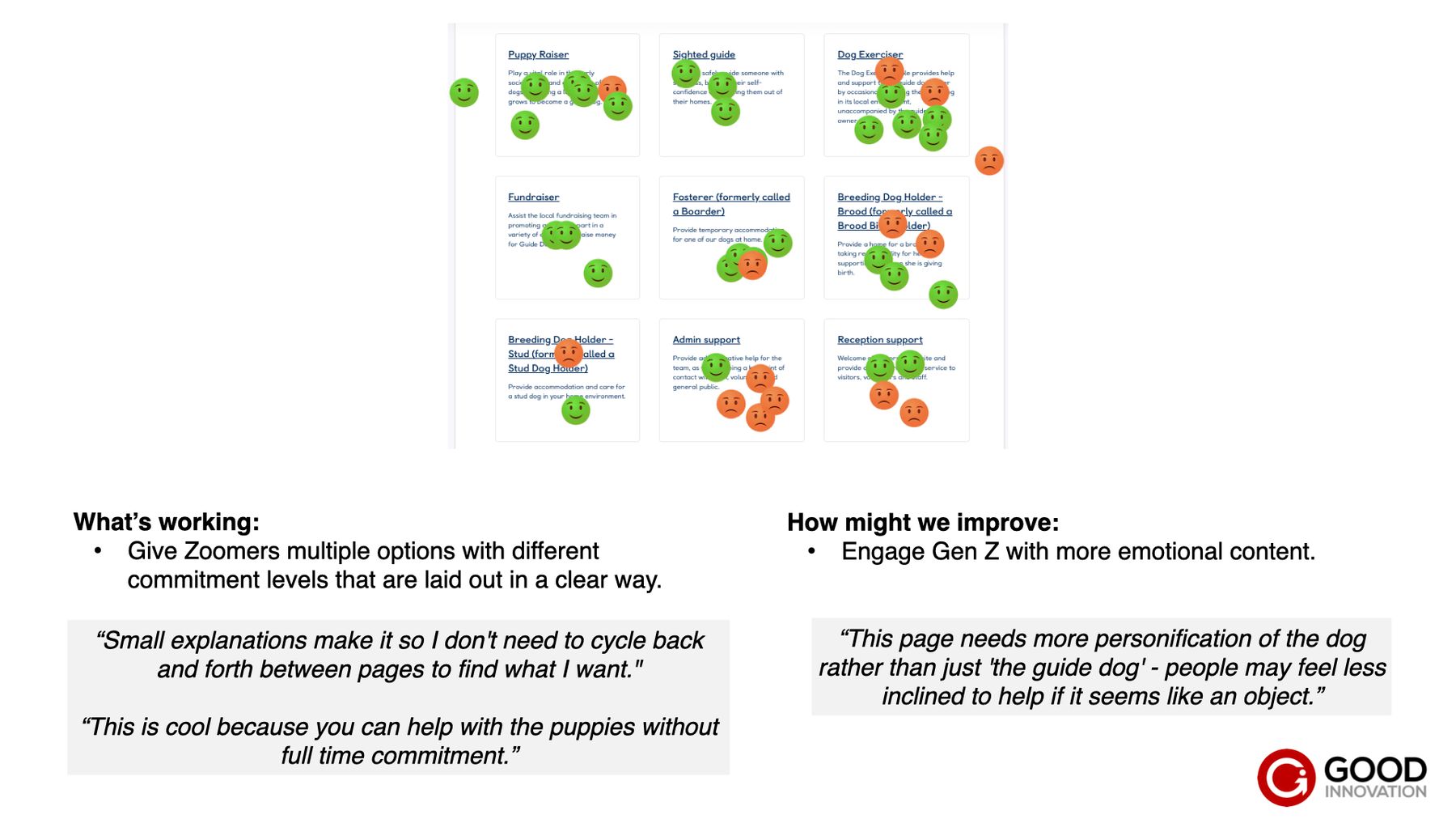
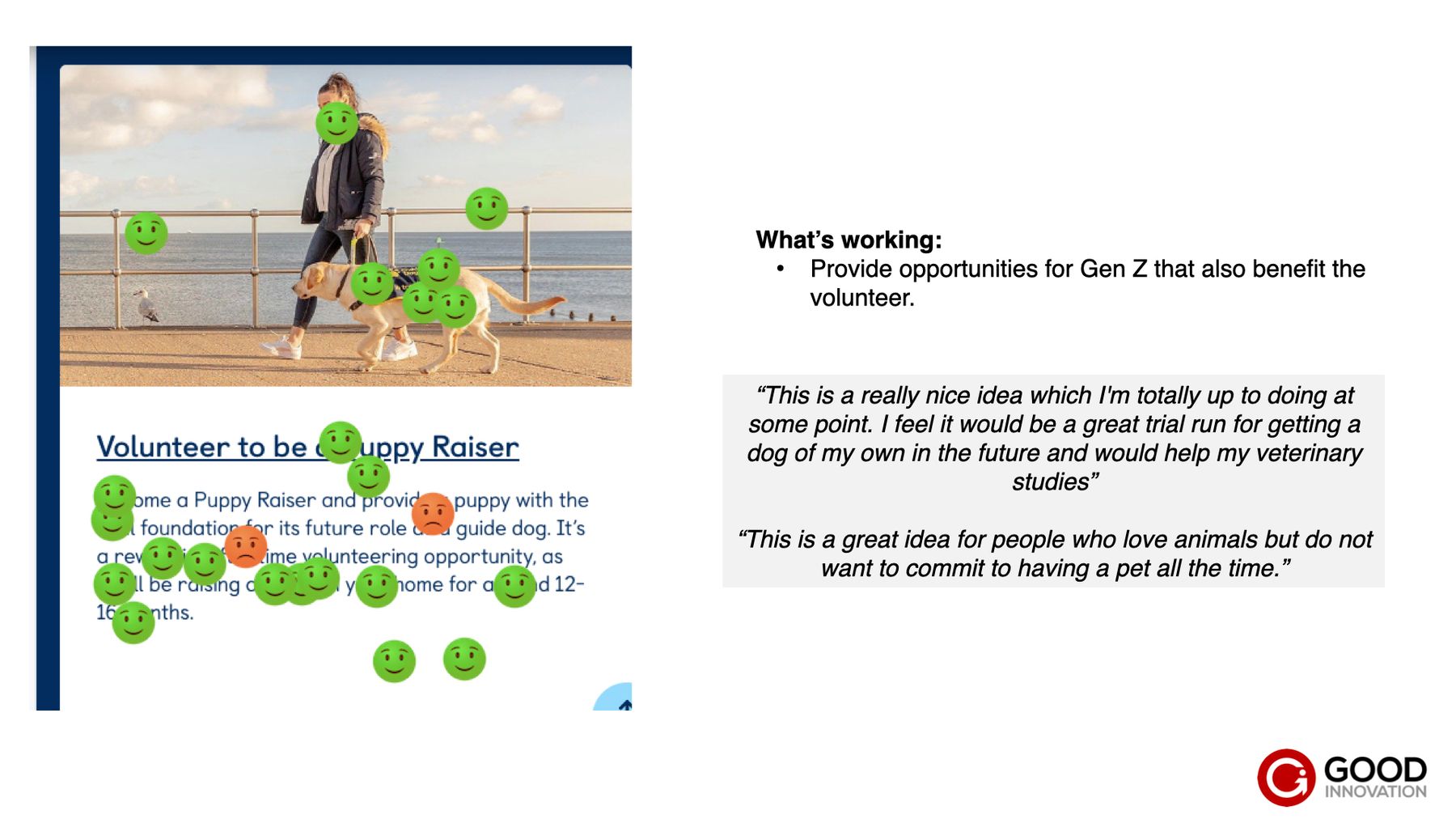
Volunteering: Give options & include benefits for Zoomers
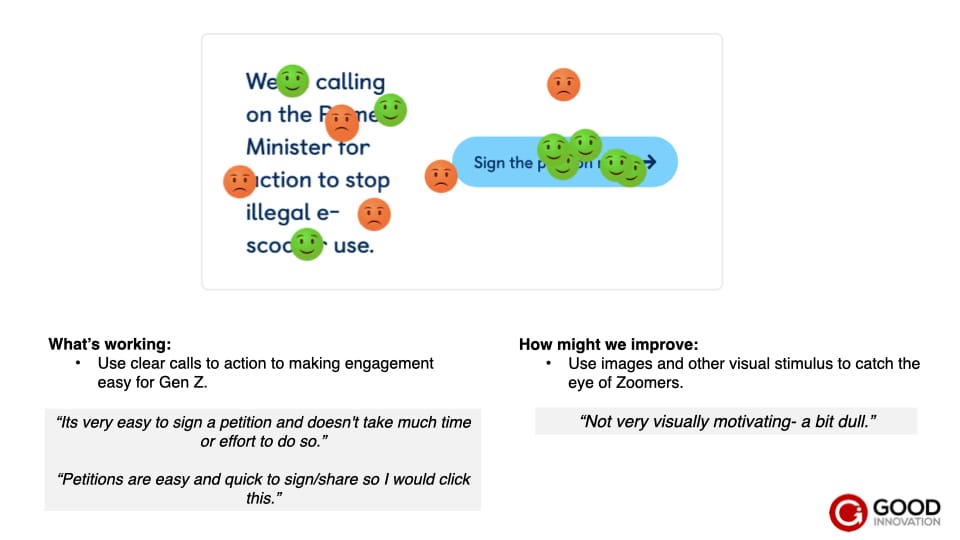
Campaigning: Empower Gen Z with specific actions
Put it to a Vote!
As we know (very well!) there are many different ways of supporting a charity. But we wanted to explore what determines the type of support Zoomers want to give.
We did this by asking our Zoomers to tell us if they agree or disagree with 3 key statements to get them to pin their colours to the mast.
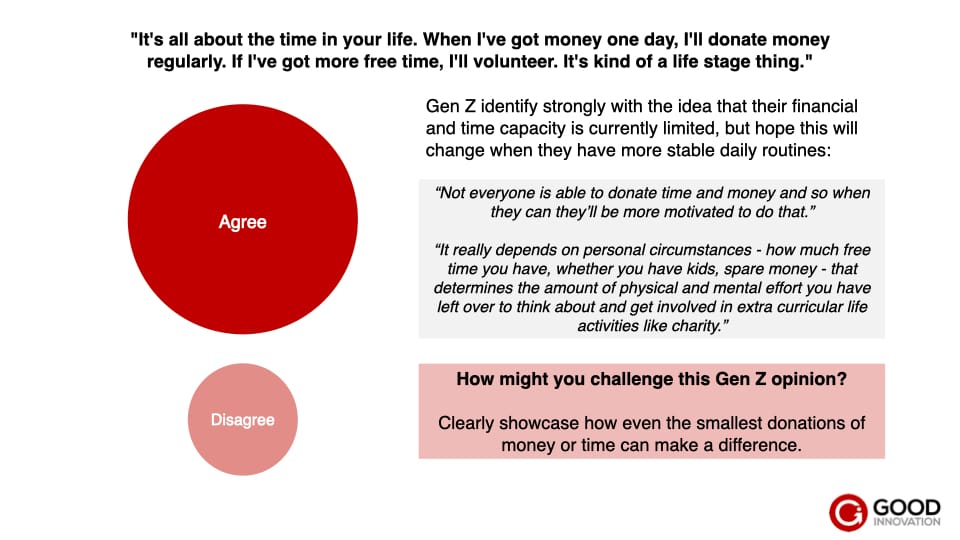
Statement A: "It's all about the time in your life. When I've got money one day, I'll donate money regularly. If I've got more free time, I'll volunteer. It's kind of a life-stage thing."
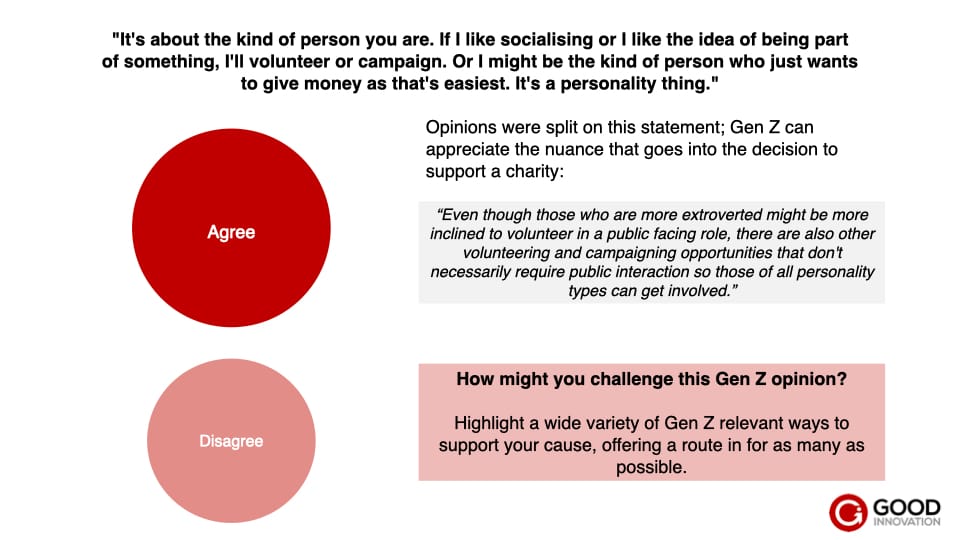
Statement B: "It's about the kind of person you are. If I like socialising or I like the idea of being part of something, I'll volunteer or campaign. Or I might be the kind of person who just wants to give money as that's easiest. It's a personality thing."
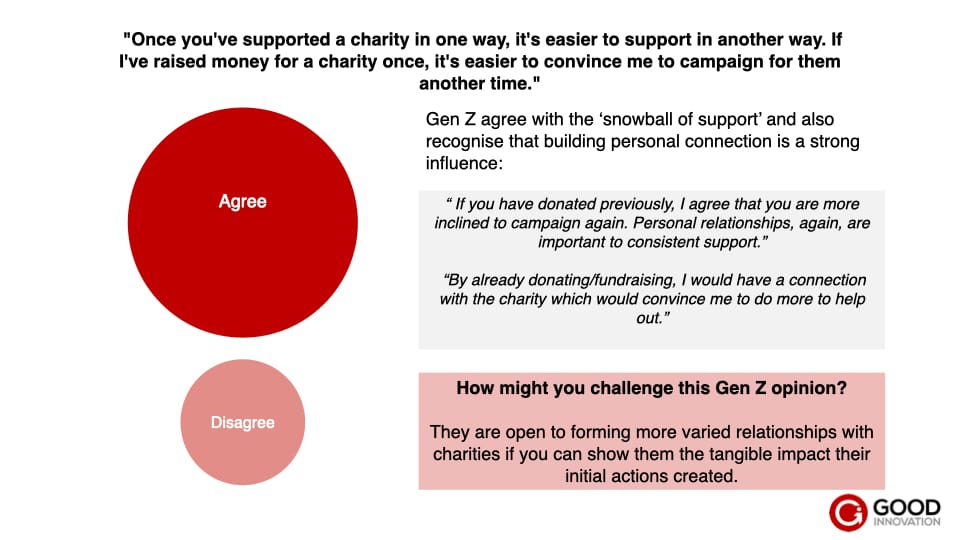
Statement C: "Once you've supported a charity in one way, it's easier to support in another way. If I've raised money for a charity once, it's easier to convince me to campaign for them another time."
Scroll down to see how the Visual Impairment and Disabilities cause collective voted, why they felt the way they did, alongside what it means for you!
Finally, we asked Gen Z to pull out their AI-predicting digital crystal ball and cast their eyes into their own futures to take a stab at how their relationships with your charities might evolve. They see lifestage as being a particularly important influence on when and how they'd be likely to get involved:
"I can imagine I'll donate once I have a stable, well paying job and in the future after retirement from my pension. I might also want to fundraise at an early stage in my career, as I think it will keep me active in a period of time where work will probably be the priority on my mind. I feel it would give me a break."
"I would like to be able to donate money, but only when I am financially stable and the cost of living crisis is resolved (wages match inflation etc.). I think volunteering is something I'd like to do in the near future as I am secure in my career so can probably find time to do this."
How might we encourage ongoing support over a lifetime?
Zoomers often perceive their likely contributions to initially be giving a little, every now and then. But in the moment, this can feel as though it lacks significance, and support can lose momentum.
Imagine a world where this audience could build a ‘Supporter Profile’ to keep a record of these seemingly small efforts over their 20s, 30s and 40s. Wouldn’t it be great if we could help them track their impact by showing the progress of their commitments throughout a lifetime. So when they feel capable of giving more time, money or effort (possibly before the age of 50!), they have an established track record to fall back on, and crucially are ‘bought’ into your cause.
For now - explore meaningful ways you can help Zoomers track their impact that’s also feasible for your organisation to manage.